What a stock fence has to do on tablelands country
A stock fence around Orange has to hold sheep and cattle on sloping, often wet ground, and keep its tension through cold winters. That is a harder job than the same fence on a dry plain. Slopes load the strainers unevenly, gullies need their own treatment, and stock push hardest where the feed is greener over the wire.
Specialised sheep farming and specialised beef cattle farming are the second and third largest employing industries in the Cabonne council area, which wraps around Orange (ABS 2021 Census). Most stock fencing enquiries come from that country: Molong, Cudal, Cumnock and Manildra to the west, and the higher cattle paddocks towards Blayney.
Fence types contractors commonly quote
Contractors usually quote one of four fence types for sheep and cattle. Which one suits depends on the stock, the pressure from outside and how much of the fence you want to be able to repair yourself.
| Fence | Usually chosen for | Ask about |
|---|---|---|
| Hinge joint or ringlock style netting with a top wire | Sheep, ewes with lambs, and mixed sheep and cattle paddocks | Wire grade, netting height, spacing of the uprights and what runs above it |
| Plain wire, several strands | Cattle, and internal subdivision fences | Number of wires, spacing, wire diameter and how tension is kept |
| Plain and barbed wire | Cattle boundaries and road frontages | Where the barb sits and whether a neighbour with horses objects |
| Netting or plain wire with electric offsets | Stock that lean, rub or push, and pig or dog pressure | Energiser size, earthing and who checks it |
One manufacturer's data sheet shows how much the same looking netting can vary. It lists a mild steel grade with 3.0 mm top and bottom wires and 2.5 mm infill, a light high tensile grade in 2.5 mm and 2.0 mm, and a high tensile grade in 2.5 mm throughout, with closer upright spacing sold as suitable for lambs (one manufacturer's data sheet). Those are that maker's figures, not a standard. The point is that two quotes for "ringlock" may not be quoting the same product, so ask for the grade in writing.
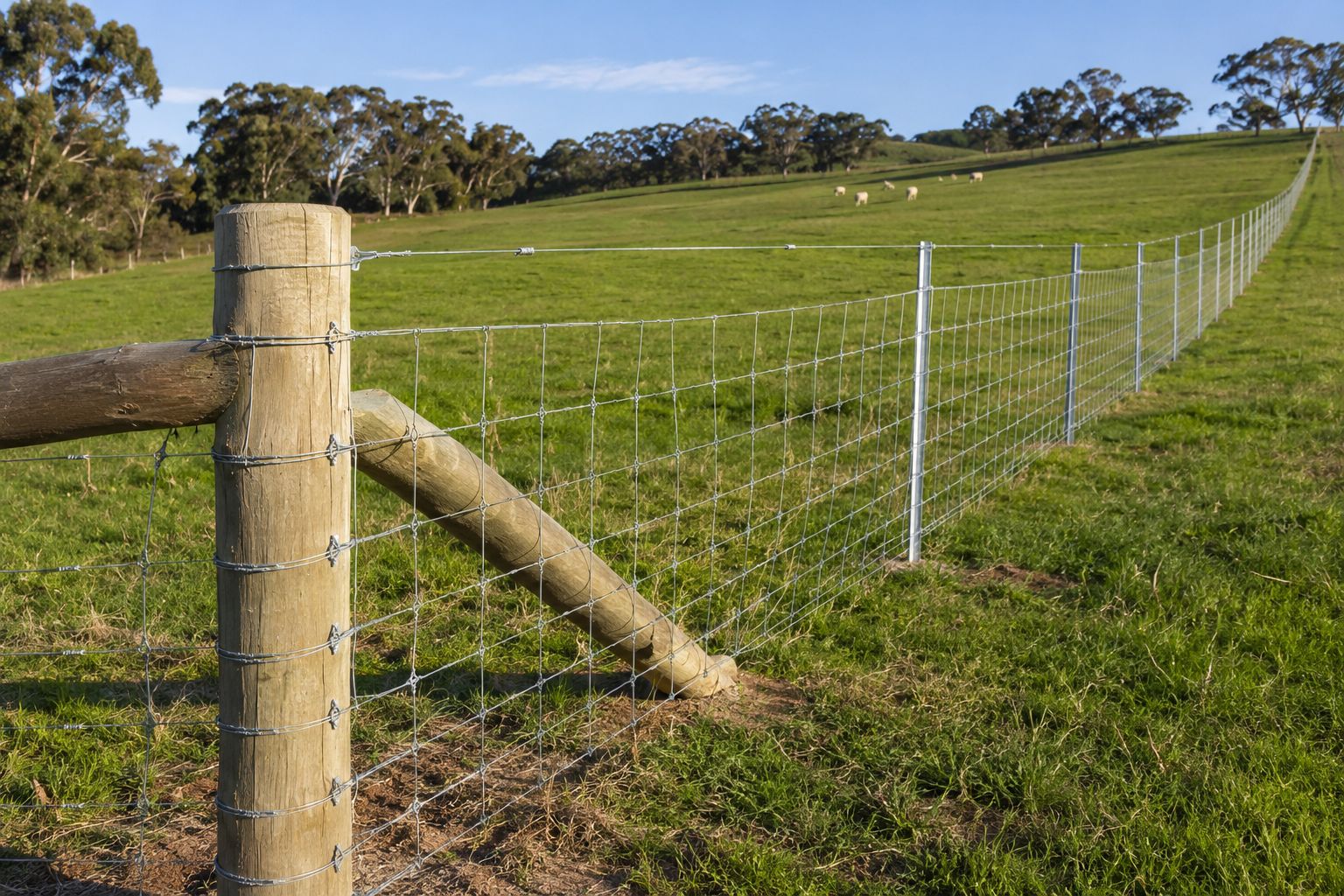
Strainers, slopes and gullies
The end assemblies carry the fence. On a hill line the contractor has to decide where the strainers go, how they are stayed and how the wire follows a change in slope without lifting posts out of a dip. Ask where each strainer will sit and what it is made of.
Timber is rated for how it stands up in the ground. A timber industry education body sorts species into four durability classes for in-ground use and says treated softwood posts should be specified to the H4 treatment level (timber industry guidance). A quote that just says "timber strainers" leaves out the part that matters, so ask for the species or the treatment class.
Gullies and creek crossings are where stock fences fail first. Floodwater loads netting with debris and pushes it over. Victorian Government guidance for riparian fences in flood-prone areas, an interstate source, suggests keeping strainer assemblies either side of a crossing independent of the main run, so a flood takes out a short section and not the whole line (Victorian riparian fencing guidance). Ask how each crossing on your line will be handled.
Sheep, lambs and what is trying to get in
A sheep fence is partly about keeping other animals out. Local Land Services ran a coordinated baiting offer across the Central Tablelands in autumn 2026 that named wild dogs, foxes, rabbits and feral pigs as the targets (Local Land Services news item). If any of those are a problem on your place, tell the contractor before they quote, because it changes the netting height, the bottom wire and whether an electric offset is worth adding. The pest fencing guide covers what the agencies say.
Cattle fences
Cattle need fewer wires than sheep but lean harder, especially at gateways, troughs and corners where they gather. Contractors usually tighten the post spacing or add an electric wire in those places and stretch it out along quiet runs. If you run bulls or wean calves against a fence, say so. For yards, ramps and crushes, ask whether the contractor builds them or works with someone who does.
Getting it quoted
Send the district, the stock, a rough length and a photo along the line through the quote form. If the fence is on a boundary, read farm boundary fencing first, because the neighbour should see the quote before work starts. The cost factors guide explains why hill lines and rock change the figure.
What this page cannot tell you
This page cannot say which wire, height or post spacing is right for your paddock, and nothing here is a specification. The wire figures quoted come from one manufacturer's data sheet and the timber classes from an industry body, not from a NSW standard for stock fences, because we did not find one. It also cannot say how long any fence will stand. The contractor who walks the line is the person to specify it, in writing.
Check the current rules before you rely on this
This page describes the stock fence types contractors commonly quote around Orange and what public sources say about wire grades, timber classes and creek crossings. It describes the rules in general terms as they stood in November 2026. Standards, forms, thresholds and fines change.
The authoritative sources are One manufacturer's hinge joint livestock fence data sheet (manufacturer claims are the manufacturer's), Australian timber industry education body, fencing (durability classes and treatment), Victorian Government, guidelines for riparian fencing in flood-prone areas (2015; Victorian guidance, interstate), ABS 2021 Census QuickStats: Cabonne (local government area) and Local Land Services, coordinated pest control across the Central Tablelands (news, April 2026). Where anything here differs from those sources, they are right and we are not.
We are not fencing contractors, builders, regulators or lawyers. For what applies to your fence, ask the contractor which licence or registration they hold for your job, then ask NSW Fair Trading or Building Commission NSW if you are unsure, and ask the council that covers the land.
Accurate at the time of writing, November 2026. Always check the source before relying on it.