How it works, in short
There is no standing fund in NSW that pays for damaged farm fences. Help becomes available when a flood, storm or fire is formally declared a natural disaster for named council areas, and then only to people who meet each program's rules. So the answer to "is there help for my fence" is always "it depends on the event, the council area and your circumstances".
That can feel like a runaround when stock are out. The rest of this page is meant to shorten it: who runs what, what past programs have covered, and what to have ready.
Who to ask
| Body | What it does | Ask it |
|---|---|---|
| Rural Assistance Authority | Runs NSW disaster grants and loans for primary producers and, in some events, rural landholders. | Whether a program is open for your council area and event, and whether fencing is an eligible cost |
| Local Land Services | Advises on stock welfare, fodder and pest animals after disasters, and has delivered fence rebuilding programs. | What on-ground help is running in the Central Tablelands |
| Your council | Runs local recovery and knows which declarations cover its area. | Whether your area is in the declaration, and what local recovery support exists |
| Your insurer | Pays under your policy, separately from any government help. | Whether fencing is covered, and what proof is needed |
The Rural Assistance Authority's storm and flood page lists programs by event, and the ones we saw listed were for events in other parts of the state (Rural Assistance Authority). The page does not mention fencing by name. Eligibility is set out in each program's guidelines, which is where to look for fences.
What past programs have covered
Fences have been an eligible cost before. The guidelines for one closed rural landholder grant listed repairing or replacing fencing and other essential property infrastructure among the things it would pay for (Rural Assistance Authority guidelines). That program is finished. It is mentioned here only to show that fence repair is the kind of cost these grants have recognised.
Closer to home, the NSW Government funded a fence rebuilding program through Local Land Services after major flooding, which paid not-for-profit volunteer groups to remove wrecked fences and rebuild stock-proof ones on farms. It covered materials, tools, transport and supervised volunteer labour, and excluded fencing that had been the subject of an insurance claim. It is closed (NSW Government).
Cabonne Council, whose area includes Eugowra, Molong and Canowindra, keeps a flood recovery page that lists the support directed at its communities after its floods, most of it for homes and community assets (Cabonne Council). It is a useful picture of how recovery money is usually aimed: town infrastructure and housing first, with farm support arriving through separate primary producer programs.
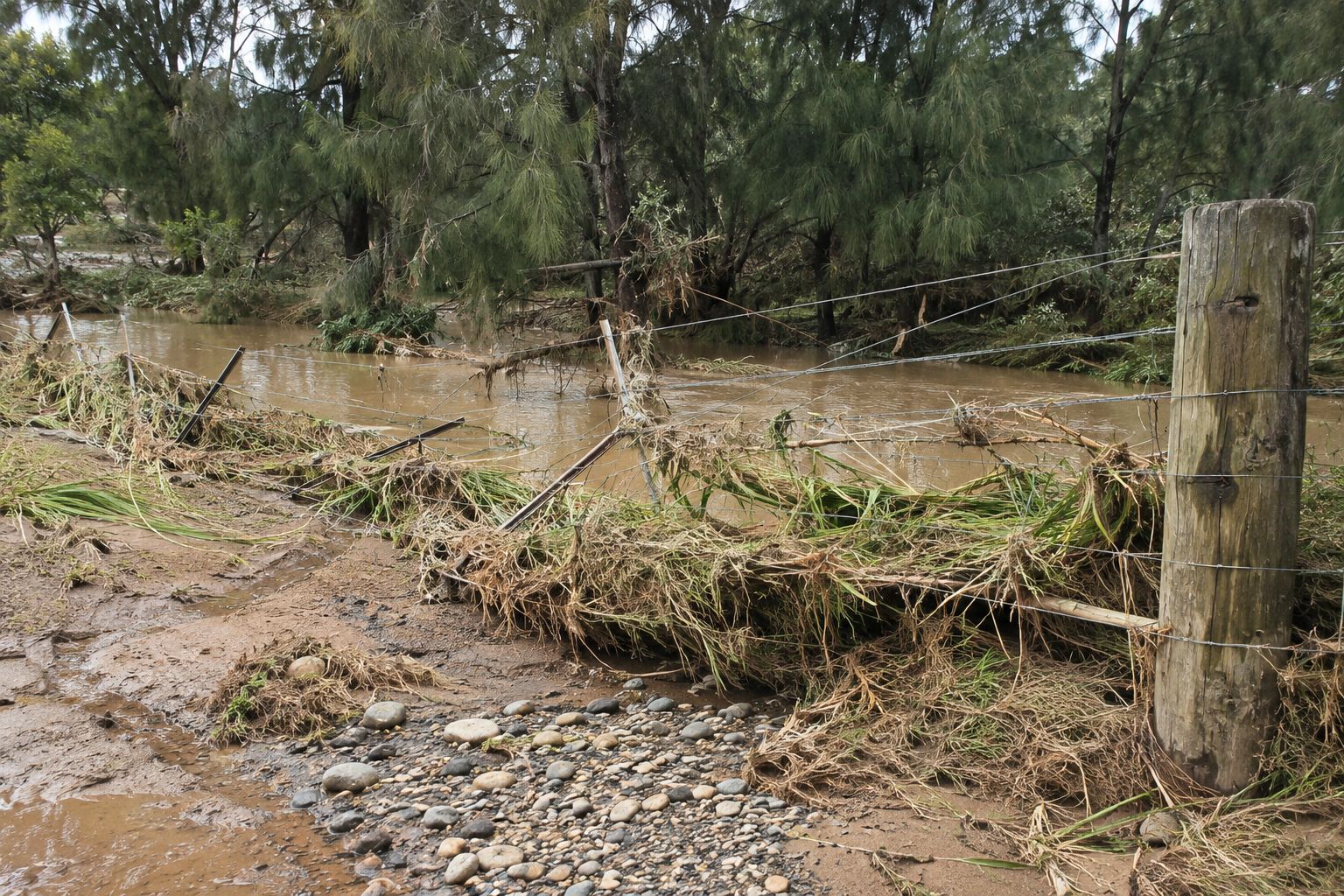
Have this ready before you apply
Whatever program opens, the same evidence is usually asked for. Gather it while it is fresh:
- dated photographs of each damaged section, taken before clean-up,
- a map or sketch marking the lengths affected,
- a written, itemised quote for repair or replacement,
- proof that you own or lease the land, and your primary production details if you are a farmer,
- your insurance position, in writing if a claim was refused,
- receipts for anything already spent.
The repair page covers the practical first steps, and a contractor can provide the quote: start on the contact page.
Common reasons claims fail
From the guidelines we read, the usual traps are these. Work done before a program opened or before approval is often excluded. Costs covered by insurance or another grant cannot be claimed twice. Hobby and lifestyle properties may not meet a primary producer test. And applications close on fixed dates that are easy to miss when you are busy fixing fences. Read the guidelines for the specific program before you spend money you hope to recover.
Boundary fences after a disaster
A flood or fire does not suspend the ordinary rule that neighbours share a dividing fence. If both of you are eligible for help, work out who is claiming what so the same metres are not claimed twice. The dividing fences guide explains the urgent repair provision and its risks.
What this guide cannot tell you
This guide cannot tell you that any assistance is open, that you are eligible or how much you might receive, and it deliberately gives no amounts or closing dates because they change with every event. It cannot lodge an application or speed one up. Nothing here is financial advice. The Rural Assistance Authority, Local Land Services and your council are the only reliable sources for what is available today.
Check the current rules before you rely on this
This page describes how disaster assistance for damaged rural fences has worked in NSW and who to ask about current programs. It describes the rules in general terms as they stood in November 2026. Standards, forms, thresholds and fines change.
The authoritative sources are Rural Assistance Authority, storm and flood disaster assistance programs, Rural Assistance Authority, Rural Landholder Grant guidelines (a closed program; historic), NSW Government, Fence Rebuilding Program extension round (closed; historic), Cabonne Council, flood recovery information and support and Local Land Services, Central Tablelands region. Where anything here differs from those sources, they are right and we are not.
We are not fencing contractors, builders, regulators or lawyers. For what is open now, ask the Rural Assistance Authority, Local Land Services and the council that covers your land, and speak to your insurer.
Accurate at the time of writing, November 2026. Always check the source before relying on it.