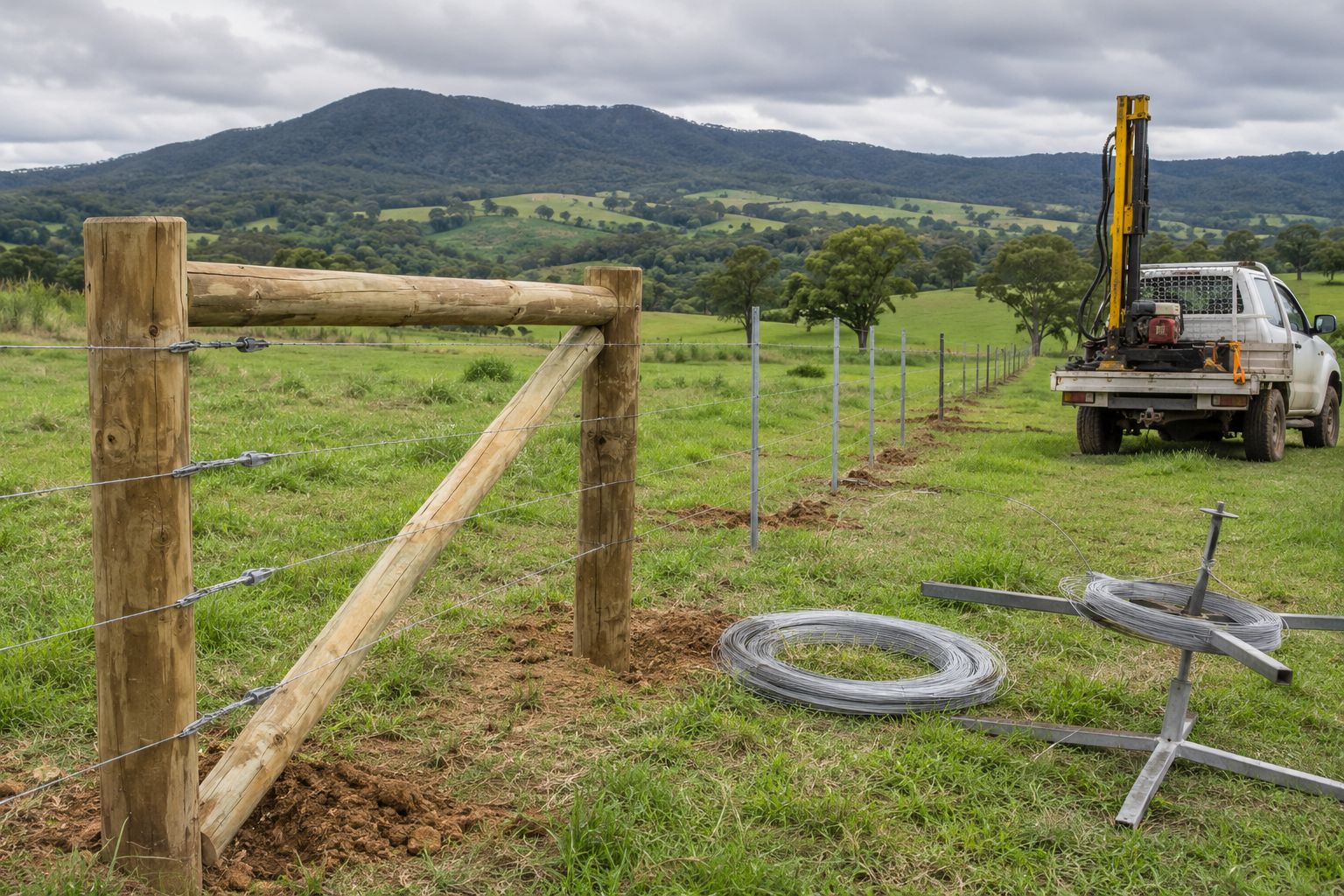
Rural Fencing in Orange & the Central Tablelands
Fence down, stock getting out or a boundary to replace? Tell us the paddock and get a written quote from a local fencing contractor.
Tell us where the fence is and what it has to hold
A town, a rough length and a photo along the line are enough to begin.
Request a quote
High, cold, wet and steep: what Orange country does to a fence
Rural fencing around Orange is hill fencing. The Bureau of Meteorology station at the Orange Agricultural Institute sits at 922 m, averages 924 mm of rain and records a mean July minimum of 1.6 degrees (Bureau of Meteorology climate statistics). That means soft ground for part of the cold season, creek lines that run hard after storms, and slopes where a strainer has to hold against the pull of the wire and the fall of the hill.
It is also mixed country. Sheep and cattle paddocks sit beside orchards, vineyards and small horse blocks, sometimes on the one road. A secondary source describes the Orange wine region as the land above 600 m in parts of the Orange, Cabonne and Blayney council areas (secondary source). Each of those neighbours wants something different from a shared fence.
Local Land Services calls the wider area the Central Tablelands: about 31,365 square kilometres with Bathurst, Blayney, Cowra, Lithgow, Molong, Mudgee, Oberon and Orange as its major towns (Local Land Services). This site takes enquiries from the western half of that region, where Orange is the centre.
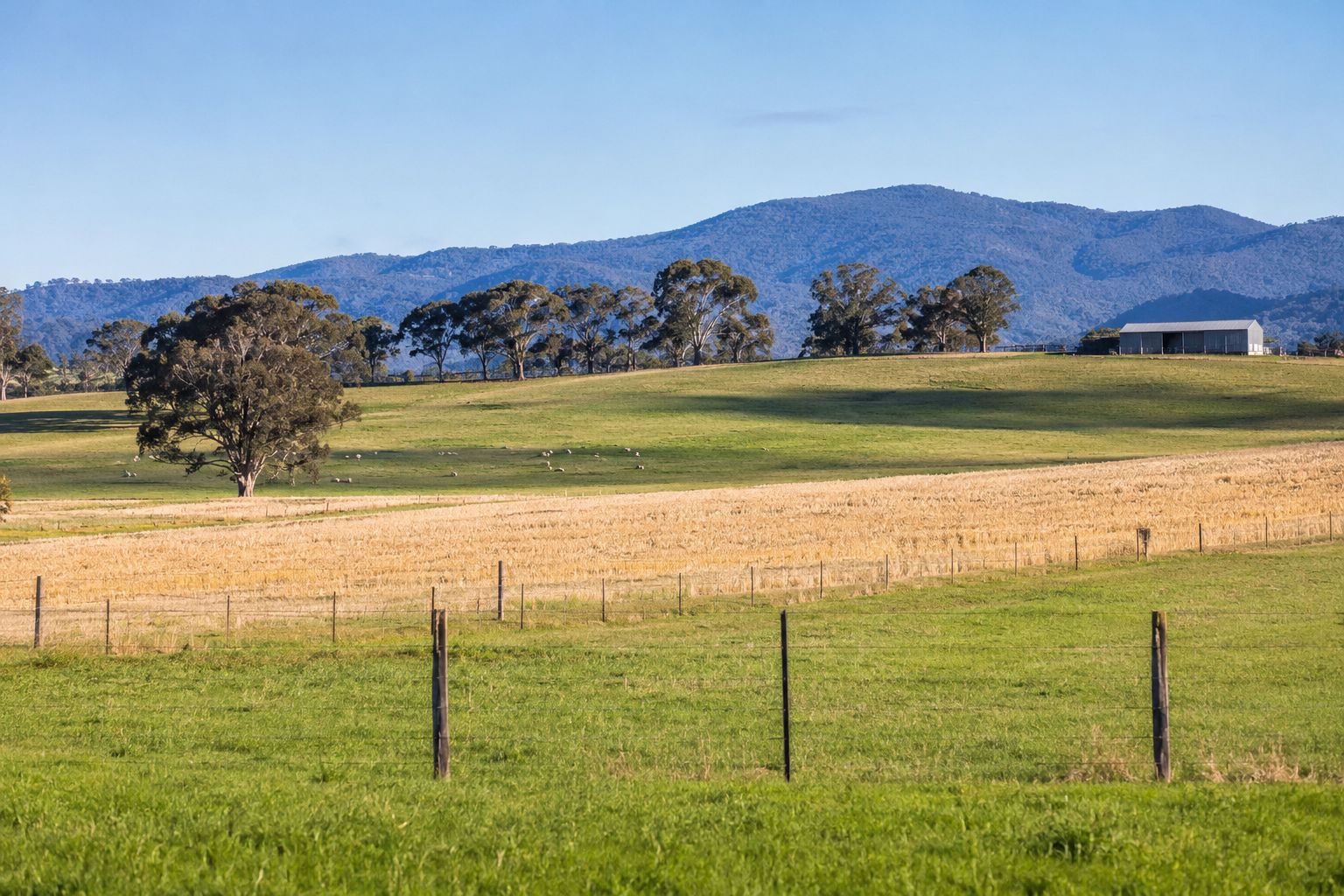
Rural fencing jobs contractors take on
Sheep & cattle fencing
Netting, plain wire and barbed fences for stock on hill paddocks.
Read more →Farm boundary fencing
Replacing a shared fence, and getting the neighbour on board first.
Read more →Electric fencing
Energisers, earthing and offsets, including creek and pig country.
Read more →Flood & fire damaged fence repair
What to do first, and what to rebuild differently.
Read more →Horse & lifestyle block fencing
Rail, wire and tape for small acreage around town.
Read more →Districts covered from Orange
Each district page says what is different about fencing there.
Molong
Sheep and cropping country in Cabonne, with Cudal, Manildra and Cumnock.
Read more →Blayney
High cattle country, with Millthorpe, Carcoar and Mandurama.
Read more →Canowindra
River flats, vines and lucerne, with Eugowra and Cargo.
Read more →Cowra
Lachlan valley sheep, cropping and irrigation blocks.
Read more →Bathurst
Grazing and lifestyle blocks, with pig and deer pressure to the south.
Read more →Eight things that make a fencing quote quicker
- The town and the councilOrange, Cabonne, Blayney, Cowra or Bathurst. It decides who to ask about approvals.
- What the fence must holdSheep, cattle, horses, or pigs and dogs kept out. See stock fencing and pest fencing.
- Boundary or internalA boundary fence usually means a neighbour pays part.
- Who is over the fenceA farm, a house block, a road, a stock reserve or Crown land. See roads and reserves.
- The groundRock, basalt floaters, wet gullies and creek crossings change the method.
- How a machine gets inGates, tracks, steep faces and trees on the line.
- The old fenceWhether it comes out, and where the wire and posts go.
- TimingLambing, joining, a sale or a fence already down.
Boundary fences and neighbours, in five lines
Most boundary jobs stall on the neighbour, not the fence. This is the usual order under the Dividing Fences Act 1991.
| Step | What the sources say |
|---|---|
| Talk first | Agree on the line, the type of fence and the quote, and put it in writing (Legal Aid NSW). |
| Cost | Adjoining owners usually share a sufficient fence equally (the Act, version dated 7 December 2024). |
| Wanting more | The owner who wants a higher standard pays the extra. |
| Notice | If talking fails, a written notice sets out the line, the work and the estimated cost. |
| No agreement | After one month either owner may apply to a court or tribunal. Sources differ on which, so check. |
The dividing fences guide walks through each step, and farm boundary fencing covers the job itself.
How this referral service works
You describe the fence. The enquiry goes to a fencing contractor who works your district, and they contact you to look at the line and give a written quote. You deal with the contractor directly from there, and there is no obligation to go ahead.
On licences, we could only find one NSW Government fencing page, and it speaks about fences on residential property boundary lines. It does not mention paddocks or farms, so this site does not say whether a licensing rule reaches your job. Ask the contractor which licence or registration applies, and check with NSW Fair Trading or Building Commission NSW if you are unsure. The contractor guide has the questions to ask.
What this site cannot do
This site cannot build, measure, price or inspect a fence, and it cannot promise that a contractor is free this month. It cannot tell you where your boundary runs, whether your neighbour must pay, or which approval or licence applies to your job. Those answers belong to the contractor, a surveyor, the council, the regulator and, for disputes, a court or tribunal. Photographs here are illustrative and do not show particular jobs.
Check the current rules before you rely on this
This page describes the country around Orange, how a shared farm fence is usually arranged and what the NSW Government page we found says about fencing licences. It describes the rules in general terms as they stood in November 2026. Standards, forms, thresholds and fines change.
The authoritative sources are Bureau of Meteorology, Orange Agricultural Institute climate statistics (station 063254), Local Land Services, Central Tablelands region, Dividing Fences Act 1991 (NSW), in-force version dated 7 December 2024 (check the current version), NSW Government, fencing work (licences and credentials; speaks about fencing on residential property boundary lines) and NSW Planning, fences (exempt and complying development). Where anything here differs from those sources, they are right and we are not.
We are not fencing contractors, builders, regulators or lawyers. For what applies to your fence, ask the contractor which licence or registration they hold for your job, then ask NSW Fair Trading or Building Commission NSW if you are unsure, and ask the council that covers the land.
Accurate at the time of writing, November 2026. Always check the source before relying on it.
Towns and districts covered:
Worth reading before you compare quotes
What moves the cost
Length, ground, wire, posts and gates.
Read more →Choosing a contractor
Questions to ask and how to read a quote.
Read more →How long fences last
Posts, wire and what wears them out.
Read more →Pest and wild dog fencing
Pigs, dogs, foxes and your biosecurity duty.
Read more →Flood and fire assistance
How help works after a declared disaster.
Read more →Approvals and clearing
Council, trees on the line and electric fences.
Read more →What a written fencing quote should spell out
Two quotes only compare if they list the same things. Ask each contractor to cover these.
| Item | What it should say |
|---|---|
| Length | The metres quoted and how they were measured. |
| Fence type | Netting or plain wire, the wire grade and the number of wires. |
| Posts and strainers | Timber or steel, the species or treatment class, and the spacing. |
| Gates | Number, width and material. |
| Creek and gully crossings | How each one is handled and what happens after a flood. |
| Old fence | Whether pulling it out and carting it away is included. |
| Rock and wet ground | What happens to the price if the driver hits rock or the line is too soft. |
| Service checks | Who arranges powerline and underground service checks. |
| Payment | Deposit, stages and when the balance falls due. |
| Licence and insurance | The details the contractor says apply to the job. |
The cost factors guide explains each line, and the contact page lists what to send with an enquiry.
What landholders around Orange ask first
Who pays for a boundary fence between two farms near Orange?
Under the Dividing Fences Act 1991, in the version we found dated 7 December 2024, adjoining owners usually share the cost of a sufficient dividing fence equally. An owner who wants more than that pays the difference. The share is asked for in a written notice that states the line, the work and the estimated cost. Check the current Act on legislation.nsw.gov.au before you rely on this.
How much does rural fencing cost per metre around Orange?
This site publishes no rates, because one figure would be wrong for most paddocks. Hill country, rock, creek crossings, the wire and posts chosen, gates and how far a machine can drive along the line all change the number. Ask each contractor for an itemised written quote and compare them line by line. The cost factors guide lists what to check.
Do you build the fence yourselves?
No. This is a referral service. You describe the job, and the enquiry is passed to a local fencing contractor who covers your district. The contractor measures, quotes, builds and is responsible for holding any licence or registration that applies to the work. This site does not inspect fences, give prices or sign contracts.
Which areas around Orange do contractors cover?
Enquiries come from Orange and the villages around it, Molong, Cudal and Manildra, Blayney and Millthorpe, Canowindra and Eugowra, Cowra, and Bathurst. Travel depends on the contractor and the size of the job, so say the town and the nearest road when you get in touch. Small jobs a long way out are harder to place than long runs.
What is the best fence for sheep on tablelands country?
There is no single answer in the sources we read. Contractors commonly offer hinge joint or ringlock style netting with plain or barbed wire above, or plain wire with electric offsets. What suits you depends on lambs, wild dog or pig pressure, slope and budget. Ask the contractor which wire grade and post spacing they propose, and why.
Can a fence be built in winter around Orange?
Often yes, but wet and frozen ground slows the work. The Bureau of Meteorology station at Orange averages a July minimum near 1.6 degrees and more than 900 mm of rain in a normal twelve months, so some lines are too soft for a tractor for part of the cold season. Ask the contractor how they plan around weather and access.
Does a farm fence need council approval in the Central Tablelands?
Many rural fences can be built without planning approval. The NSW planning page says exempt fences in rural zones use post and wire or post and rail and stay within a height limit, with exceptions for heritage and sensitive land. It does not name farm fences directly, so confirm with the council that covers the block before work starts.
What should I send to get a quote started?
Send the town or locality, what the fence has to hold or keep out, a rough length, whether it is a boundary or an internal fence, and what the ground is like. A phone photo looking along the line helps more than anything else. If a neighbour shares the fence, say whether you have spoken to them yet.
Send a town, a photo and what the fence must hold
Say the district, what the fence has to hold or keep out, and roughly how long it is. A contractor who works that country takes it from there.