A regional city with farms on every side
Rural fencing around Bathurst covers everything from small horse blocks on the city's edge to large grazing properties out towards Rockley and Sofala. The Bathurst Regional council area had 43,567 people at the 2021 Census, almost the same as Orange, with a median weekly household income of $1,585 (ABS QuickStats, Bathurst Regional). Its five largest employing industries were all services, led by hospitals. The farming is in the land around the city, not in its job figures.
Local Land Services names Bathurst as one of the major towns of the Central Tablelands (Local Land Services), and its biosecurity work in the district is some of the best documented in the region.
Pigs, dogs and deer to the south
The country south of Bathurst has real pest pressure. A Local Land Services case study describes landholders there forming a group to tackle feral pigs that were tearing up pasture, damaging canola and wheat and taking lambs, and it names foxes, wild dogs and deer as long-standing problems in the same area (Local Land Services case study).
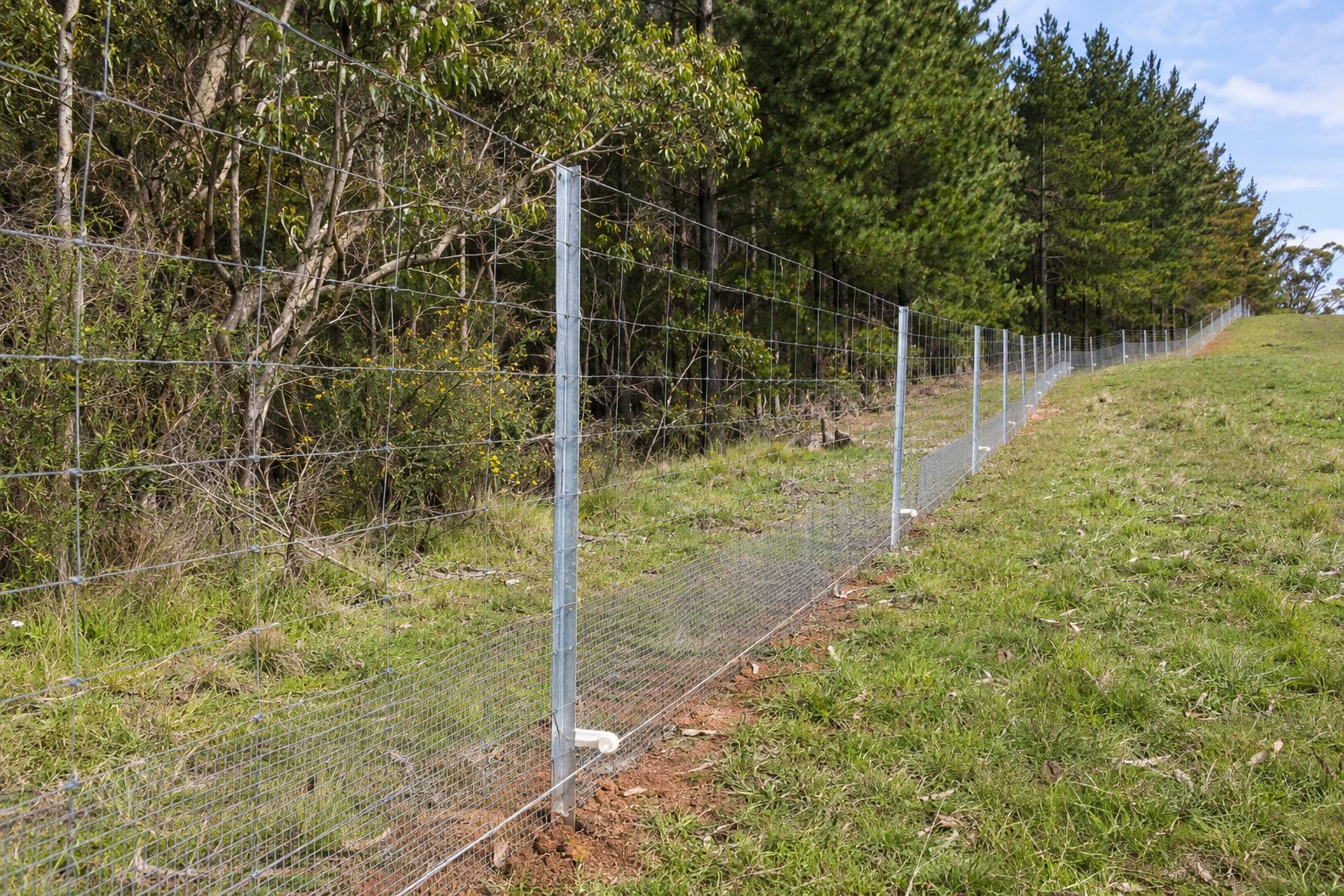
The group used baiting, trapping, shooting and weed removal, and added electric exclusion fencing. One landholder reported building tens of kilometres of it and estimated it kept out well over half the pigs that had been coming through. That is the clearest local evidence we found that exclusion fencing has a place here, and also that it works as part of a wider program. If pigs are the reason you are fencing, ring the Local Land Services biosecurity officer before the contractor.
What gets asked for
| Job | Where | Read more |
|---|---|---|
| Stock boundaries and subdivision | Grazing country in every direction | Stock fencing |
| Pig and dog exclusion | South towards Rockley and Burraga, and along timbered edges | Pest fencing guide |
| Horse and small acreage | The ring of blocks around the city and Perthville | Horse and lifestyle fencing |
| Electric offsets and hot wires | Anywhere an old fence is being nursed along | Electric fencing |
Fences beside forest and reserve
A lot of farmland in this district backs onto pine plantation, state forest or other public land, and that is where pigs, deer and dogs come from. It is also where the question of who pays is least clear. A secondary source says public authorities are generally not bound to share dividing fence costs, though some contribute. Ask the agency that manages the land next door before you get quotes, and see roads, stock routes and Crown land.
Tall exclusion fences can also go past the 1.8 m height that NSW planning guidance allows for exempt rural fences. If yours will, speak to Bathurst Regional Council first. The approvals guide explains the conditions.
Lifestyle blocks
Bathurst has a wide belt of small rural holdings, and they generate a steady stream of short, fiddly, highly visible fencing jobs: frontages, horse paddocks, dog-proof house yards and boundaries between neighbours who have never had to agree on a fence before. Most of the friction is avoided by talking to the neighbour first and getting one quote you both see. Farm boundary fencing covers the order to do it in.
Getting it quoted
Bathurst is on the eastern side of the area this site covers. Send the locality, the purpose, the length and a photo through the quote form. If the job is pest exclusion, say which animal and whether neighbours are fencing too.
What this page cannot tell you
This page cannot tell you how bad pest pressure is on your property or promise that a fence will stop it. The pig fencing result quoted is one landholder's estimate from a case study, not a measured trial. The census figures are for the whole Bathurst Regional area. For pests, Local Land Services is the authority. For planning, ask Bathurst Regional Council. For the fence, ask a contractor who has built exclusion fencing nearby.
Check the current rules before you rely on this
This page describes rural fencing work around Bathurst, including what a Local Land Services case study says about feral pig exclusion fencing in the district. It describes the rules in general terms as they stood in November 2026. Standards, forms, thresholds and fines change.
The authoritative sources are ABS 2021 Census QuickStats: Bathurst Regional (local government area), Local Land Services, Central Tablelands region, Local Land Services case study, targeting feral pigs across boundaries (south of Bathurst), NSW Planning, fences (exempt and complying development) and NSW Government, general biosecurity duty. Where anything here differs from those sources, they are right and we are not.
We are not fencing contractors, builders, regulators or lawyers. For what applies to your land, ask the Local Land Services biosecurity officer about pest animals, Bathurst Regional Council about planning, and the contractor how the fence will be built and checked.
Accurate at the time of writing, November 2026. Always check the source before relying on it.